
Modern web-based time tracking software continues to innovate offering features that extend far beyond simple clock-in and clock-out functionalities in an effort to meet evolving and diverse business needs. One such powerful and increasingly prevalent feature is geo-tracking. This technology, leveraging GPS and location services on mobile devices, has the power to supercharge how businesses monitor remote teams, manage field operations, and ensure accurate timekeeping – all while offering a layer of transparency and accountability previously unavailable to small businesses.
The benefits of implementing geo-tracking are many. Firstly, it enhances accountability. Employees are more likely to record their time accurately when their location is being tracked, reducing instances of time theft or discrepancies. This leads to more precise payroll processing and fairer compensation for both employers and employees. For project based time tracking, location tracking streamlines project management. For example, when managers know the real-time location of teams in the field, they can efficiently dispatch resources, respond quickly to urgent requests, and enjoy a clearer understanding of progress at various sites. This improved visibility can lead to better resource allocation and ultimately, increased profitability.
Furthermore, geo-tracking can contribute significantly to safety and compliance for businesses with specialized needs. In industries where safety regulations are paramount, knowing the location of lone workers or teams in potentially hazardous environments can be crucial for rapid response in case of emergencies. Additionally, for businesses operating in regulated industries, geo-tracking can provide the necessary location data to demonstrate compliance with specific work hour or location-based regulations
While GPS and other location enabled time tracking can improve operations by allowing employers to monitor the location of their employees, there are pros and cons to consider when evaluating this feature.
Two Geo-Tracking flavors: GPS vs Geolocation
GPS locates people by triangulating their coordinates using a network of satellites as they pass by by. Most cell phones today have GPS receivers that enable them to determine their location within a specific accuracy radius (usually in meters). Location can also be determined by other means, such as information stored with network provider using an IP address. In these cases, the accuracy can vary widely making non GPS location unreliable at times. It’s important to understand the differences between GPS tracking and Geolocation tracking because most laptops and desktop computers lack GPS receivers, so coordinate accuracy radius can vary.
Breadcrumb vs Punch Time Geo-Tracking
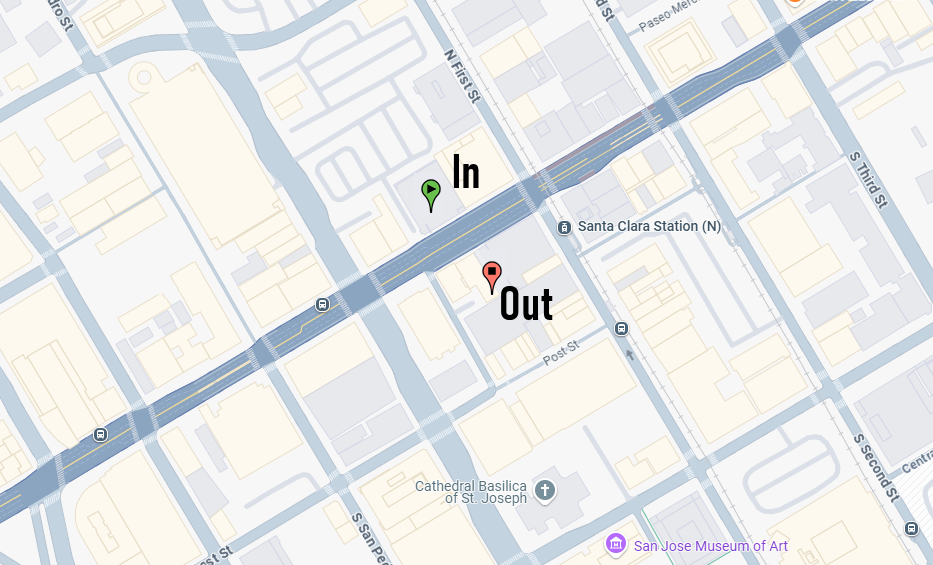
Some employers just want to know where an employee is clocking in or out from. Other managers want a breadcrumb trail showing where the employee is during the day. These are two very different things. A website like Timesheets.com tracks punch coordinates, but can’t provide a breadcrumb trail. This is because Timesheets.com doesn’t install software on the phone, so we only know where users are when they send us their geo-tracking information by punching the clock. In contrast installed apps can track location up to 100% of the time to create a breadcrumb-like map of where the employee was.
While breadcrumb tracking provides vastly improved visibility into the movement of workers, it comes at several costs. A phone transmitting coordinates all day long can drain a device’s battery and use more data. It’s also a privacy concern to employees who may not want to be tracked during non work periods. In contrast, web based software doesn’t require downloading, installing, or updating an app and works with any device. It’s a better choice for clients who don’t need a constant worker location tracking.
Geofence vs Punch Location Tracking
Many services offer geofencing. This is the practice of creating a virtual perimeter where, in theory, workers may punch the clock. Meanwhile, punch location tracking records the location of a user at the time of their punch, but doesn’t fence them into any specific location. Geofencing can provide employees flexibility when it comes to punching into or out of work, as long as they are within the confines of the mapped area. This feature, however, is often inappropriate for smaller business because of the coordinate accuracy radius.
For businesses that operate out of small offices, geofencing can be problematic. A worker could try clocking in from, for example, the coffee shop next door and if the accuracy radius of their GPS reading is poor, they would be allowed to punch in. Or, to put this another way, a 700 sq. ft. office is too small for accurate geofencing when a device’s accuracy radius can often be 150 feet or more.
For businesses with larger trackable areas, such as big construction projects of work campuses, geofencing offers invaluable flexibility while preserving clock security.
Addressing Geo-Tracking Privacy
Employee privacy is a significant concern that must be addressed transparently and ethically. Clear communication about how the data is collected, used, and secured is essential to build trust and avoid potential legal issues. Companies should establish clear policies outlining the purpose of geo-tracking, the data being collected, and the measures in place to protect employee privacy. It’s crucial to emphasize that the technology is intended for legitimate business purposes, such as verifying work hours and location for field-based roles, and not for constant surveillance.
Geo-tracking represents a significant advancement in online time tracking, offering tangible benefits in terms of accuracy, accountability, and operational efficiency, particularly for businesses with remote or field-based teams. While privacy concerns must be carefully navigated through transparent policies and ethical implementation, the potential for optimizing resource management, enhancing project oversight, and ensuring accurate timekeeping makes geo-tracking a powerful tool in the modern business landscape. As technology continues to evolve, we can expect even more sophisticated and nuanced applications of geo-tracking within the market, further blurring the lines between the office and the field.