In the digital age, we’ve come to expect convenience and accuracy in every aspect of our work life. Yet, for countless businesses, the simple act of clocking in and out remains a source of inefficiency and potential financial loss. While mobile apps and desktop trackers have their place, for organizations with a centralized, on-site workforce, the humble time tracking kiosk is re-emerging not as a relic of the past, but as a sophisticated solution for the modern workplace.
A kiosk-based time tracking solution is far more than a digital time clock; it is a strategic tool designed to streamline operations, enhance security, and empower both employees and management. At its core, the primary benefit is simplicity. Kiosks are designed to be fast and easy to use, and allow employees to punch the clock and move on to other things within just a few seconds. While other web-based methods require a username and password authentication process, a kiosk assumes to already know identities of the users and doesn’t, therefore, require a traditional login process. Instead a simple 4 digit pin is enough to identify individual users.
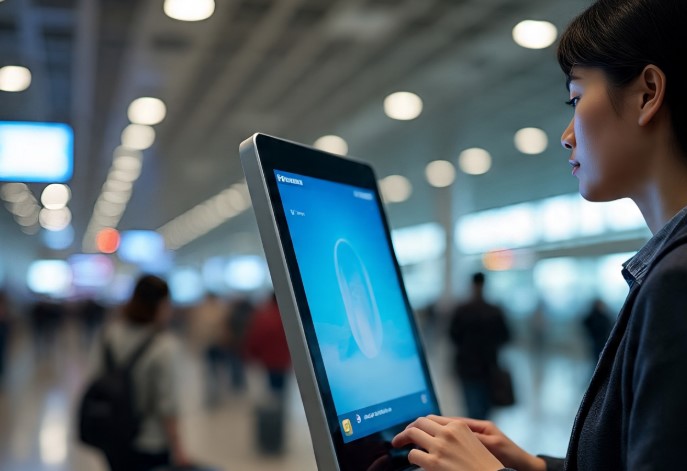
Kiosks like the one developed by Timesheets.com are also capable of advanced security features such as photo timestamp, a process that helps defeat “buddy punching,” the age-old practice where one employee clocks in or out on behalf of another. This form of time theft can cost businesses thousands of dollars annually. Modern kiosks, armed with advanced biometric technology like facial detection, make this practice impossible.
The advantages extend well beyond security. A centralized kiosk dramatically improves the accuracy of time data. Unlike manual timesheets or prone-to-error paper logs, kiosk data is captured in real-time and sent directly to the cloud. This automated process minimizes data entry mistakes, which can lead to compliance issues and payroll discrepancies. When integrated with a robust SaaS platform, the kiosk data flows seamlessly into payroll systems, automating the entire process and saving HR and administrative teams countless hours of manual work. This allows them to focus on more strategic, high-value tasks instead of chasing down timesheet approvals or correcting errors.
Moreover, a kiosk provides a single, universally accessible point of contact for the entire workforce. For many businesses, not all employees are equipped with a smartphone or have access to a personal computer. A kiosk serves as a shared, reliable device that every employee can use. This inclusivity ensures that no one is left out of the system, fostering a more equitable and efficient work environment.
But the most significant benefit may be the kiosk’s potential as a multi-functional hub. The latest kiosk apps can be deployed on standard tablets, turning a simple time clock into a powerful self-service portal. Employees can use the kiosk not just to clock in and out, but also to check their work schedules or time off balances, and view important company announcements. This capability reduces the administrative burden on managers and provides employees with greater autonomy and a direct line to critical information.
In essence, a kiosk-based solution modernizes the workforce by blending the physical with the digital. It solves the on-site operational challenges that other solutions cannot, while leveraging the power of cloud-based software to provide security, accuracy, and efficiency. For some businesses looking to optimize their time and attendance management, moving to a kiosk-based system may be a necessary step toward a more secure, streamlined, and productive future.